life
Dexter Morgan
.
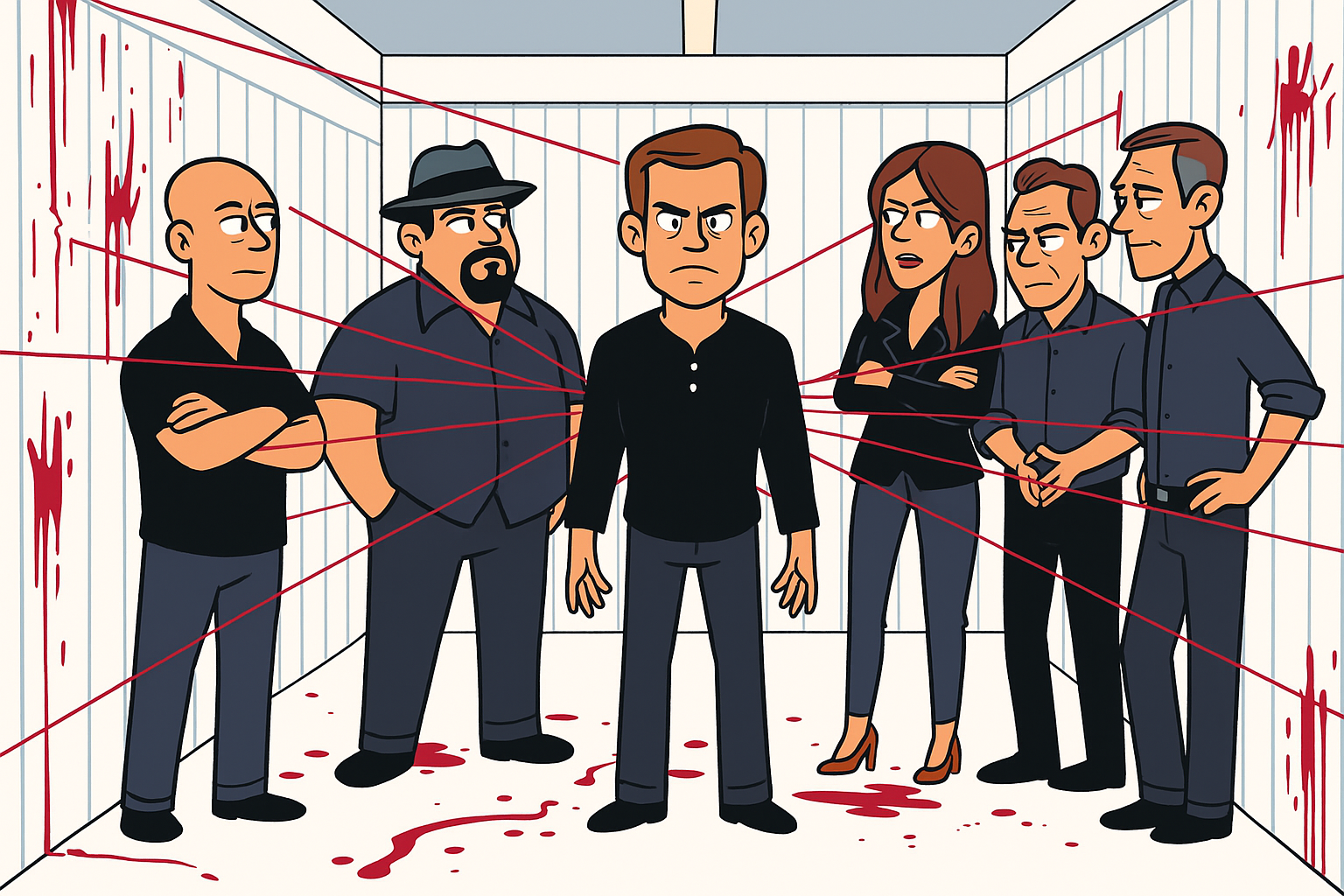
Dexter Morgan lives by a philosophy that is both survival mechanism and moral compass. From a young age, his life is defined by trauma — the formative event of witnessing his mother’s brutal death imprints a permanent fracture in his psyche. Out of this fracture grows what he calls the “Dark Passenger,” the inner voice of compulsion and violence that never truly leaves him. Rather than deny or repress it entirely, Dexter accepts this entity as a part of himself. His philosophy is built around containment: to channel destructive urges into a ritualized system of justice, targeting only those who are “deserving.” In doing so, he convinces himself that his pathology can coexist with society, provided it is governed by rules.
This system, however, reveals how mentally unwell Dexter truly is. His detachment from ordinary human emotions is not just a side effect of trauma, but a defining characteristic of his worldview. He describes himself as empty, unable to connect authentically, and yet constantly mimics human interaction to blend in. The Dark Passenger becomes both scapegoat and shield — an externalized identity onto which he projects his compulsions. By splitting himself into Dexter the socially functioning man and Dexter the killer guided by his Passenger, he creates a coping mechanism that spares him from fully confronting his fragmented self. This dissociation highlights not only his pathology but also his inability to reconcile his urges with his humanity.
Within this internal battle, light figures emerge: his father Harry and, later, his brother Brian. Harry symbolizes structure, discipline, and morality. The so-called “Code of Harry” is the framework that keeps Dexter from descending into chaos, a set of ethical boundaries meant to make killing “justifiable.” In Dexter’s mind, Harry represents light because he offers clarity and purpose, a guiding star that allows Dexter to believe he is more than a monster. Yet Harry is also a fabrication of memory, an idealized authority figure who continues to instruct him long after death. Dexter’s dependency on this paternal presence shows how deeply he clings to borrowed morality, unable to construct his own.
Brian, by contrast, embodies temptation and acceptance. Unlike Harry, who imposes order, Brian represents the possibility of surrendering to chaos. As Dexter’s biological brother, Brian sees no shame in their shared darkness. He is the voice of liberation, urging Dexter to embrace killing without rules or guilt. To Dexter, this is both alluring and terrifying — it is a mirror showing what he could become without restraint. Thus, Brian becomes a symbol of shadow turned into light: an invitation to authenticity, albeit a destructive one. His existence forces Dexter to confront the fact that the Dark Passenger may not be separate at all, but intrinsic.
The tension between these figures — Harry as guiding light, Brian as liberating shadow — illustrates the fragmented philosophy Dexter holds. He does not believe he can ever be whole; instead, he views life as a negotiation between containment and release. The presence of the Dark Passenger gives him language to describe compulsion, but it is his reliance on external figures that shows his instability. He is unable to stand on his own moral ground, instead oscillating between borrowed codes and rejected temptations. This constant division keeps him unwell, for he never integrates his identity.
Ultimately, Dexter’s philosophy is tragic. He imagines himself as a predator disguised among men, someone who can never fully belong. Yet, by creating a system in which he directs his darkness toward “justice,” he maintains a sense of purpose. It is not healing, nor is it redemption — it is survival. The Dark Passenger is both curse and companion, while Harry and Brian represent the extremes of light and shadow he cannot fully choose between. Dexter embodies the psychological struggle of a man who is never at peace with himself, trapped in the liminal space between monster and man, structure and chaos, darkness and light.